Passing or foraging
Movement without a center
An insect visiting flowers, water, food, garbage, or simply crossing the yard may be away from its nest. Its presence does not establish that a colony is on the structure.
Stinging Insect Resources
A striped insect at a flower, steady traffic through one soffit opening, and a paper nest beside a doorway are three different observations. This hub helps you decide what each one actually tells you.
Behavior before labels
Watch from a comfortable distance. What the insects return to, and whether they return at all, can be more informative than the first name that comes to mind.
Passing or foraging
An insect visiting flowers, water, food, garbage, or simply crossing the yard may be away from its nest. Its presence does not establish that a colony is on the structure.
Repeated activity
Insects repeatedly entering the same ground opening, soffit gap, wall joint, or protected cavity provide stronger evidence of a nearby nesting area.
Visible construction
Open comb, an enclosed paper envelope, or built-up mud can narrow the possibilities. It still helps to consider the insect, current use, and exact location.
Concealed nesting
When nesting is inside a void or below ground, regular entry and exit traffic may reveal more than a search for the hidden nest itself.
Nest and location as evidence
Nest architecture is not a guaranteed identification chart. Use it with behavior and location to refine the question.
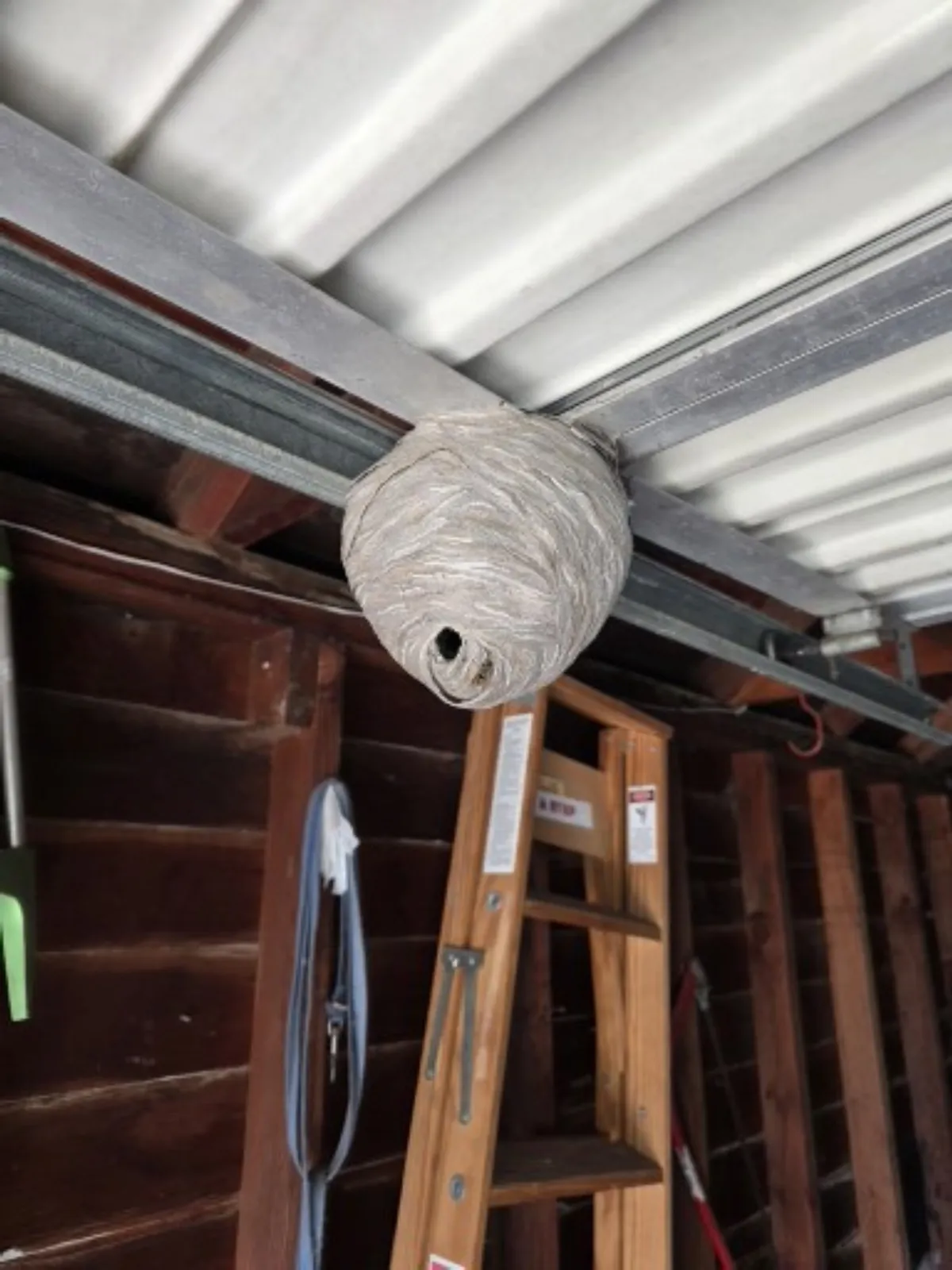
A nest beside stored equipment or a normal work path creates more interaction than the same kind of nest high in a remote tree.
Often associated with paper wasps around eaves, soffits, railings, decks, sheds, and other protected surfaces. A visible nest does not automatically require treatment.
Repeated movement can point toward yellowjacket nesting below ground or inside a protected void. A single insect at food cannot locate the colony.
Bald-faced hornets can build conspicuous enclosed nests. A remote nest and one beside an entrance are meaningfully different situations.
Mud daubers are solitary wasps, not a social colony in miniature. Old mud structures can remain after current nesting has ended.
Many useful observations begin here. Note the insect, direction of travel, approximate size, setting, and whether movement repeats.
A more useful hierarchy
Broad grouping helps set expectations without pretending that a quick glance can settle every identification.
Colony-forming wasps
Paper wasps, yellowjackets, and bald-faced hornets form colonies, but their nest architecture, usual locations, and encounters with people can differ.
A different social structure
Mud daubers build individual mud cells or tubes. That construction represents a different situation from an active social-wasp colony, and an old nest may be inactive.
A broad group, not one answer
Different bees nest and behave differently. Pollination, appearance, and the label “bee” do not by themselves establish whether an insect is harmless, whether a colony is present, or what response fits.
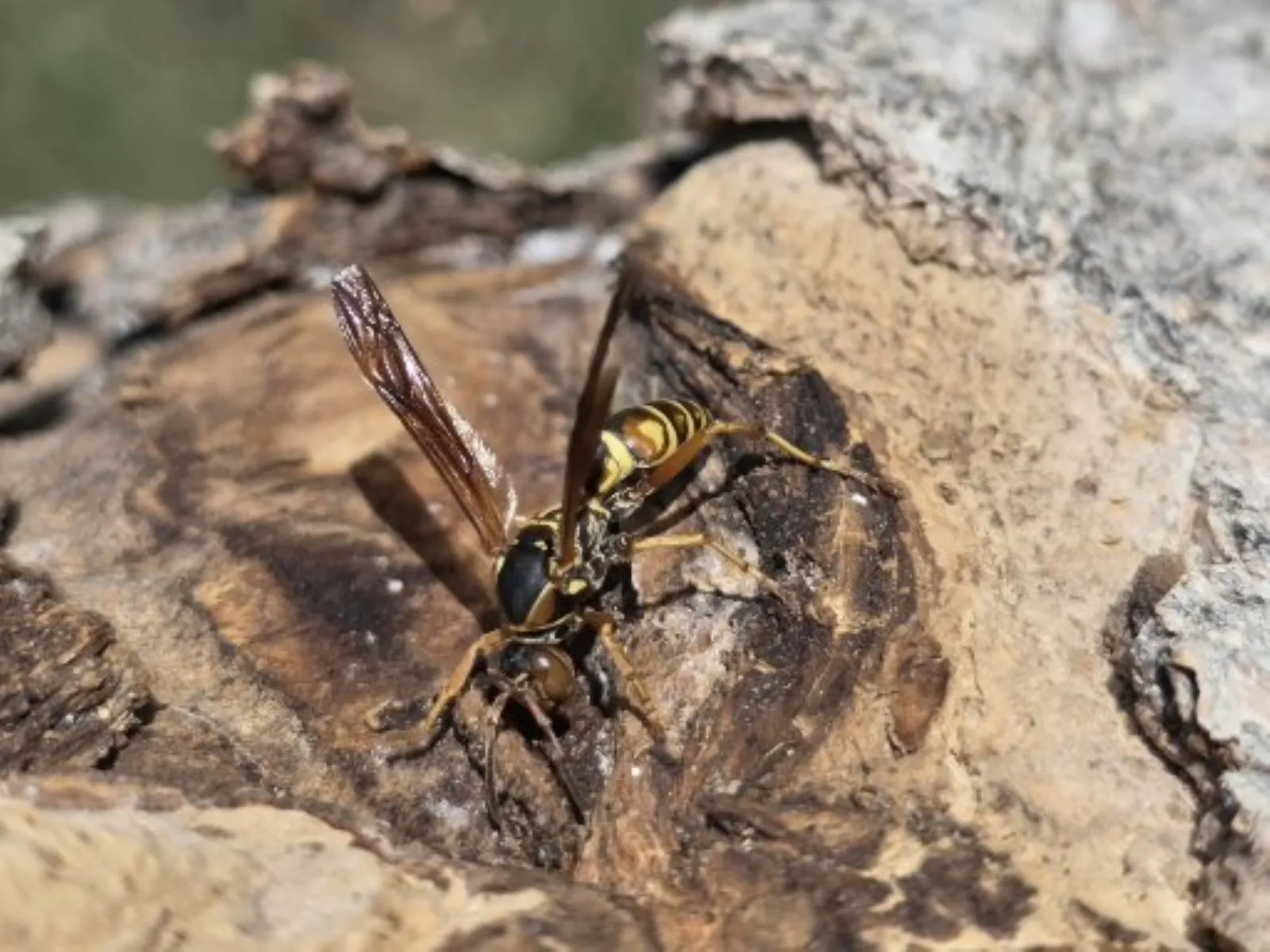
Body form and markings can narrow a group. Behavior, nest type, and location complete a more useful picture.
Interaction, not a danger score
A visible nest is not automatically a conflict. Its setting changes the practical decision.
Identification Help
A focused close-up can help, but the opening being used, the nest, and the surrounding area may provide the missing clue. Include approximate size, location, what the insects were doing, and whether the movement repeats.
A photograph may narrow the possibilities without producing a certain identification.
Continue learning
When action may be useful
Monitoring may be enough when activity is remote or incidental. If the location creates frequent interaction, the nest is concealed, or safe access and identification are uncertain, the service page explains Great North’s approach.